目次
- First, the honest answer: yes, but the money has a gate
- Why most faceless channels quit in the first 40 videos
- The one thing that separates channels that last
- What actually earns money without showing your face — and what quietly gets you demonetized
- How much can you realistically make?
- A realistic 90-day plan to make money on YouTube without showing your face
Search how to make money on YouTube without showing your face and you get two kinds of answers: a listicle of ten methods with no context, or a thread promising passive five figures by next month. Both skip the part that decides whether you make anything at all. This guide is the version written from how the channels actually behave — what earns, what quietly gets you demonetized, and what the people running these channels say when they are being honest.
"Without showing your face" is real — plenty of channels never put a person on camera. It does not mean "without making videos," and it does not mean "without work." You still publish videos; the work just moves off-camera into a repeatable process: choosing topics, writing or directing scripts, and running a production line instead of filming yourself. Below is what that looks like when it works, and the specific ways it fails.
First, the honest answer: yes, but the money has a gate
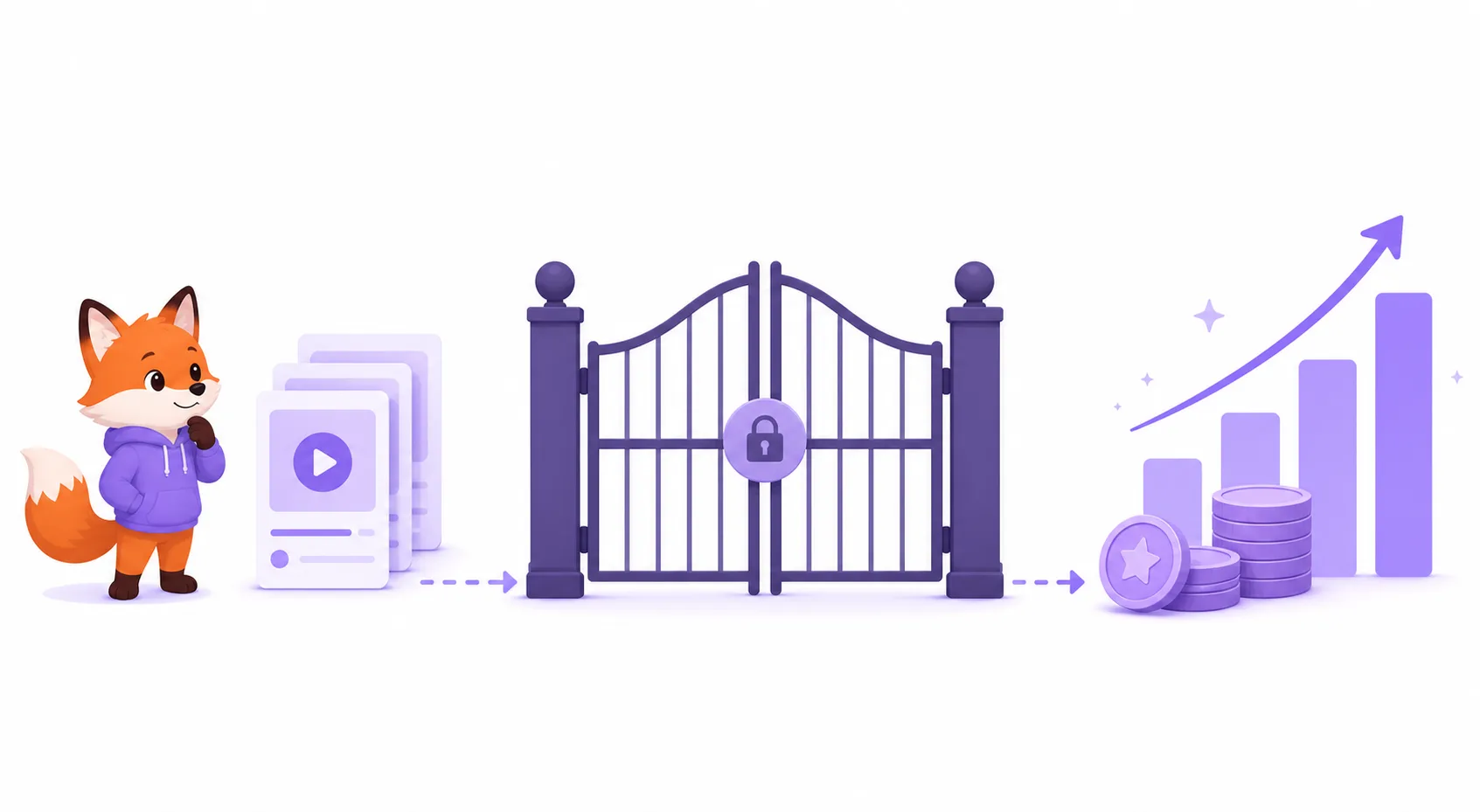
You can earn without ever appearing on camera or filming a thing. But most of the money on YouTube still runs through ad revenue, and ad revenue has a gate. To join the YouTube Partner Program and monetize, a channel needs 1,000 subscribers plus 4,000 valid public watch hours in the past 12 months, or 1,000 subscribers plus 10 million valid public Shorts views in the past 90 days. Until you clear that bar, ad revenue is zero no matter how good the videos are.
That single fact reorders everything. The methods that get you to the gate fastest — and keep you there — are worth more than the clever monetization ideas you read about. So the real question is not "what are the ten ways to earn," it is "which of these can a solo operator actually sustain long enough to clear the gate and compound past it."
Why most faceless channels quit in the first 40 videos
The most useful thing said on this topic did not come from a blog. It came from an operator on r/passive_income who scaled a channel to $5,000 a month and then ran several more. His summary: faceless channels do work, "but not in 20-40 videos." The people who fail almost all quit inside that window — right before a catalog starts to compound — because they were sold "post daily and you'll be successful soon," which he flatly calls wrong.
His second point matters even more, because it contradicts the entire "automation" sales pitch: quality outperforms daily posting. There are, in his words, "tons of AI slops and duplicate uploads happening every single second." Volume without a reason to watch is not a strategy; it is noise the algorithm has learned to ignore. The channels that clear the gate are the ones that stay consistent and keep each video worth finishing.
The lesson is not "give up." It is that the timeline is longer than the pitch admits, and the first 40 videos are the tax you pay before anything compounds. Plan for that, and the quit trap stops being a trap.
The one thing that separates channels that last
Here is the mechanism nobody selling a course wants to lead with. A creator on r/OnlineIncomeHustle documented a year across three formats, and their self-reported numbers tell the story. Their first channel — a TikTok AI-story page — grew to about 110,000 followers over eight months. Platform payouts were around $150 a month; the real income, about $500 a month, came from selling their workflow guide. Good numbers for a side project. But a single post took them roughly four hours to make, and the honest takeaway was blunt:
"If you can't automate the workflow, you will burn out. It's not a question of motivation, it's a question of when."
That is the whole game. Not motivation, not niche, not luck — leverage. When you are the bottleneck for every single upload, the catalog can never get big enough to compound, because you run out of hours first. Their next move proves the point: they deliberately pivoted to a format they could produce semi-passively, because sustainability beat passion in the math.
This is where "automation" earns its keep — and where it is usually misunderstood. Automating the workflow (drafting, voiceover, visuals, captions, publishing) is what removes the bottleneck. Automating the judgment (what topic, what angle, what is actually interesting) is what produces the AI slop that gets ignored and demonetized. The winning setup automates the first and keeps a human on the second.
That split is exactly what a tool like fableclip is built around: you set a series once — topic, script style, art style, voice, background music, captions, and schedule — and it runs the repetitive production loop for every episode: script draft, AI visuals, voiceover, and word-synced captions in one pass, published on the cadence you set. What it removes is the four-hours-per-post grind, not the craft. Those setup choices are the craft, and they are where your results are actually won or lost: the wrong script-style prompt gives you a generic hook, a mismatched voice or art style breaks the mood, background music sets the wrong pace. Expect to test a few episodes, listen back, and tune those settings — the tool makes each iteration cheap, but the judgment about what works is still yours to refine.
What actually earns money without showing your face — and what quietly gets you demonetized
Not every "without filming" method is equal. Sorted by whether a solo operator can sustain it:
- Search-intent evergreen content — the most durable. An operator on r/passive_income built "somewhat passive" income doing reviews and tutorials that "people are already searching for." His insight: a video answering a question people keep asking "can quietly rack up views every single day" for months and years, while a trending video "blows up for a week and then dies." Once you have 20–30 videos in one niche, "they start to feed each other." Low ceiling per video, high durability.
- Faceless niche channels (story, explainer, curiosity) — the scalable core, if the content is genuinely engaging and the workflow is automated. This is where AI production actually fits.
- Affiliate and digital products — real income, but they ride on top of an audience you still have to build first. They are a monetization layer, not a shortcut to the gate.
- Compilations, reused clips, and pure AI slideshows — the trap. This is not an opinion; it is policy.
That last point is where most "make money without videos" advice will get your channel killed. YouTube's reused and inauthentic content policy — updated July 2025 — explicitly makes several of these methods ineligible for monetization: content "copied from other sources without any substantive modifications," compilations "with little narrative," image slideshows "lacking narrative value," and "AI-generated content made with generic or unoriginal templates giving the impression of mass production." The operator scaling to $5k a month said the same from the field: YouTube will "demonetise channels using it randomly," so he refuses to mass-produce with AI and leans on original edits within fair use.
Read those two sources together and the strategy writes itself: AI is fine as a production tool; AI as a content substitute — templated, unoriginal, mass-produced — is a demonetization risk you are building on sand.
How much can you realistically make?
This is the part most guides on how to make money on YouTube without showing your face either exaggerate or dodge. Honestly? It is less than the thumbnails promise, and it depends on things no listicle can quote. YouTube publishes no official RPM-by-niche table, so any guide citing exact per-niche dollars without a source is guessing. What we can anchor to are creators' own disclosures.
The clearest public number comes from our own teardown of a faceless channel with 7.6M views on one video: the spread between its best and worst upload was 170x, with most videos sitting in the five figures and two hits carrying the channel. That is the shape of the business — a portfolio where a few winners subsidize a long tail. The operator on r/OnlineIncomeHustle, a UK student, also flags a factor US-focused guides skip: non-US/UK audiences monetize noticeably lower, and he tells US creators to "bump numbers by roughly 20-30%." Treat every figure as a planning input, not a promise.
The practical read: your niche sets a ceiling, but consistency and packaging decide where under that ceiling you land. A channel you can run for a year at a modest RPM out-earns a high-RPM niche you abandon at video twelve.
A realistic 90-day plan to make money on YouTube without showing your face
Built from what the operators above actually did, not from a monetization wishlist:
- Weeks 1–2 — pick one automatable format, not a niche you "love." The burnout lesson is the whole point: choose a format you can produce without being the bottleneck. Write ten episode titles in ten minutes; if you cannot, it is a video idea, not a channel.
- Weeks 3–8 — lock the format and ship consistently. Fix your hook, pacing, and style so a viewer knows what they are getting in the first three seconds — one commenter called this "format lock-in," and it is what lets retention (and the algorithm) respond. This is the 40-video tax. Do not re-decide the format every upload; every re-decision is a chance to stall, and stalling kills more channels than niche choice.
- Weeks 9–12 — build the catalog and let it feed itself. Aim for 20–30 videos in one lane so they start recommending each other. Do not chase the gate with volume-for-volume's sake; chase it with videos worth finishing.
Nothing here is truly passive — the operators are unanimous on that. But once the workflow is automated and the catalog compounds, each video becomes a small asset that works while you sleep. That is the honest version of making money on YouTube without showing your face: not a faucet you switch on, but a library you build once and keep.
If you want the repetitive production loop off your plate, set up a series in fableclip — dial in the script style, voice, art style, and music, then let it produce and publish episodes on your schedule. You still tune those settings as you learn what lands; it just handles the grind so each iteration costs minutes, not hours.
よくある質問
Can a beginner make money on YouTube without showing your face?
Yes, but not quickly. You still have to clear the YouTube Partner Program gate — 1,000 subscribers plus 4,000 public watch hours in 12 months (or 1,000 subscribers plus 10M Shorts views in 90 days) — before ad revenue starts. Beginners succeed by picking one automatable format and shipping consistently for months, not by posting daily for three weeks and quitting.
Can you monetize a YouTube channel with zero subscribers?
Not through ad revenue. The Partner Program requires 1,000 subscribers first. Before you clear that bar, income has to come from off-platform layers — affiliate links, digital products, or selling your own workflow — which still depend on building some audience.
Is it realistic to make $10,000 a month without showing your face?
For a small minority, eventually, yes — but it is an outlier, not a plan. Faceless channels are a portfolio game where a few hit videos carry a long tail of modest ones. Most operators who share real numbers report side-income figures for a long time before anything approaches that, and many never reach it. Budget for the realistic middle, not the headline.
Are AI-generated videos monetizable on YouTube?
AI as a production tool is fine; AI as a content substitute is not. YouTube's reused and inauthentic content policy (updated July 2025) makes "AI-generated content made with generic or unoriginal templates giving the impression of mass production" ineligible for monetization. Use AI to produce original, genuinely useful videos — not to mass-produce templated slideshows.
Is YouTube automation legal?
Running a faceless or automated channel is allowed. What is not allowed is monetizing content that violates the reused/inauthentic policy — copied clips without substantive modification, low-narrative compilations, or mass-produced templated uploads. Automate the workflow, keep the content original, and you stay inside the rules.
ひとつのテーマから顔出しなしのシリーズ動画を
Fableclip が脚本・ナレーション・イラスト・字幕をすべて自動で仕上げ、各エピソードを TikTok、YouTube、Instagram に自動投稿します。最初の動画は無料の動画枠で作成できます。
無料でシリーズを始める →