On this page
- What "YouTube automation" actually means
- Real view distribution
- The three-beat opening hook
- The snap-back close
- The title-topic gap
- Borrowed authority
- Two format templates
- Art style and duration
- Faceless niches that work
- The end-to-end autopilot workflow
- Demonetization risk and the money truth
- Topic ideas you can use
Search YouTube automation and you get two kinds of articles: "what is a faceless channel" explainers that never show you a real one, and 4,000-word tutorials that are really just an ad wearing subheadings. None of them do the one thing that would actually help: pull the scripts apart, word by word, and show you the formula.
So I did. I scraped every video on a channel called Zenn (@Zenn0009) and read every script front to back. Faceless, no camera, doodle animation. Zero to 150K+ subscribers in about two months. One video — What Did Ancient Humans Do at Night? — at 7.6 million views. Not luck, not AI spam. There is a repeatable formula: how the openings work, how the endings land, why titles matter more than production, and where the substance comes from. Here is the full teardown.
What "YouTube automation" actually means
"YouTube automation" gets used for two different things, and mixing them up is the first mistake beginners make.
One is a production workflow: you don't film yourself. You assemble each video from a script, an AI voice, visuals, and captions, so one person ships what used to need a team of five. The other is a business model — a "faceless channel" you run like a small media product, with work systematized or outsourced, and you never on camera.
Zenn is both. No host, no face, no studio — just a topic, a script, a voice, a recognizable art style, and a publishing rhythm. Everything that scares people off has been engineered away. What's left is the part that actually drives views: the idea and the packaging. That is the promise of automation, and also the trap — removing yourself from the video does not remove the need to be interesting.
Real view distribution
Here is what the channel looks like, pulled from the public video list (only counting videos old enough to have settled):
- What Did Ancient Humans Do at Night? — 7.6M
- The Calhoun Effect — 3.7M
- Why You Can't Remember Being a Baby — 1.8M
- What If WE Are The Aliens? — 794K
- What Did Ancient Humans Actually Eat? — 677K
- What Did Ancient Humans Do All Day? — 307K
- Why Hasn't Anyone Raised the Titanic? — 162K
- ...down through the tens of thousands...
- The Pratfall Effect — 44K
From 44K to 7.6M — a 170x spread. A couple of hits carry the channel while most videos sit in the five figures. Faceless channels are a portfolio, not a hit machine. You are buying lottery tickets, cheap, and printing them on a schedule.
The channel got to 7.6M on two things: the amount of information packed into the first fifteen seconds, and how dead simple the visuals stay:
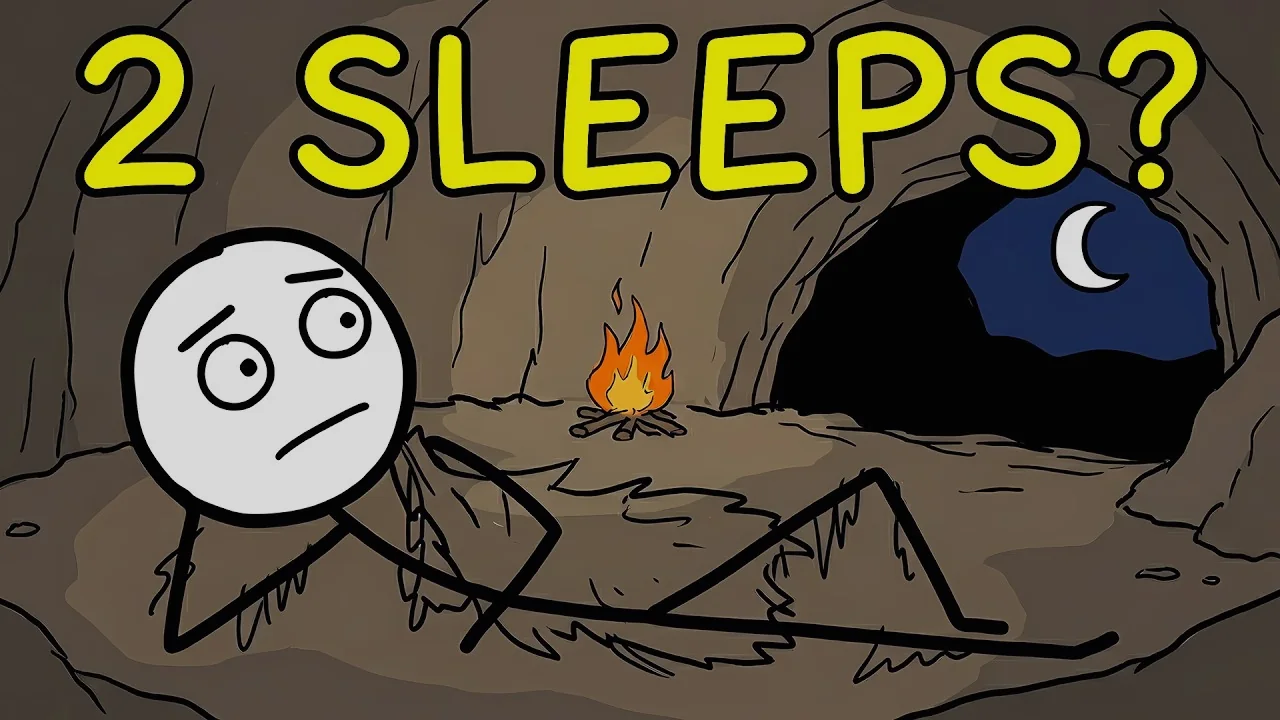 Zenn's faceless YouTube hit — the video that got 7.6M views
What Did Ancient Humans Do at Night? — 7.6M views.
The three-beat opening hook
Line up the openings of Zenn's biggest videos and the same structure appears every time. No intro music, no "hey guys, welcome back" — three beats:
Beat 1 — pull you into the present moment (second person, present tense, something you do every day):
- Night: "Tonight, when the sun goes down, you're going to flip a switch. Light will flood the room, and you won't think twice about it."
- Eat: "Open your fridge right now. A can of soda, some yogurt, leftover pizza..."
- Baby: "You lived an entire life before the age of three. You were born. You opened your eyes for the first time. You heard your mother's voice. You said your first word — and you remember none of it."
Beat 2 — pull the rug out (the thing you take for granted is wrong or strange):
- Night: "But for 99.9% of human history, that switch didn't exist. When the sun set, the world went dark. You couldn't even see your own hand."
- Eat: "But to your ancestors, none of this is food."
- Aliens: "Every species on this planet has spent millions of years adapting to Earth. Fish developed gills. Birds evolved hollow bones. And then there's us. We burn in our own sunlight. Our spines are falling apart."
Beat 3 — seal the open loop (a promise you have to finish watching to collect):
- Eat: "The answer would horrify most people alive today. Scientists have found proof in caves around the world."
- Night: "And the answer will change everything you think you know about sleep."
The rule: write these three sentences before anything else. If the opening doesn't hook, the rest doesn't matter.
The snap-back close
None of Zenn's videos end with "like and subscribe." The last sentence snaps the big abstract topic back onto you personally:
- Night: "We traded all of that for a light switch, and most of us never even knew it was gone."
- The Calhoun Effect: "The mice didn't have a choice. We still do. What happens next is on us."
- Baby: "Your brain was doing something far more important than remembering. It was becoming you — and that required, quite literally, destroying the person who came before."
- All Day: "We are still hunter-gatherers. We just stopped doing it."
The topic is ancient humans, mice, brains — but the landing is always you. That turn makes people watch to the end and forward it. The rule: after the body is done, write one sentence that snaps the topic back to the viewer's own life.
The title-topic gap
The cleanest proof that titles matter more than production sits inside Zenn's own catalog. The "named effects" series uses the same art, the same format, the same pipeline — the only variable is the topic and the title:
- The Calhoun Effect — 3.7M
- The Spotlight Effect — 116K
- The Bliss Point — 53K
- The Pratfall Effect — 44K
Same everything, 84x spread. The Calhoun video is about a perfect mouse paradise where everyone dies — that tension crushes dry labels like "The Pratfall Effect." A great script cannot save a title nobody wants to click. Write the title first. If a stranger wouldn't feel compelled to click, don't make the video.
Borrowed authority
Faceless does not mean fabricated. Every Zenn script is pinned to real, verifiable research:
- The Calhoun Effect: psychologist John Calhoun's "Universe 25" mouse utopia — eight mice, unlimited food, zero predators, five years later every one dead from no cause a vet could name.
- Why Do Dogs Love Us: Belyaev's silver-fox domestication experiment, continued by Lyudmila Trut, 60 years and 45,000 foxes.
- All Day: the Hadza hunter-gatherers of Tanzania, who "work" about 2.5 hours a day.
- Money: anthropologists searched for a century and never found a single society that actually ran on barter (the textbook origin story is a myth).
This is what separates a channel that survives demonetization from one that gets buried — real substance, not a reworded Wikipedia paragraph.
Two format templates
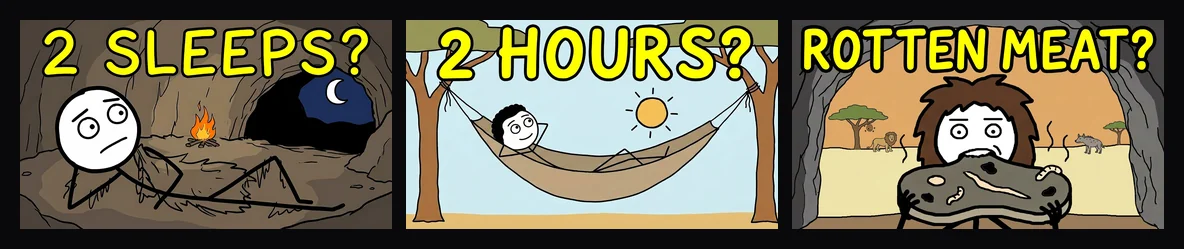 The "What Did Ancient Humans..." format, refilled across Night, All Day, and Eat — one idea, many episodes. (Source: youtube.com/@Zenn0009, shown for analysis.)
Zenn is not running 19 isolated ideas. It is running two repeating templates:
- "What Did Ancient Humans..." trilogy: Night (7.6M) / All Day (307K) / Eat (677K) — same structure, new topic each time.
- "The ___ Effect" series: Calhoun (3.7M) / Spotlight / Pratfall / Bliss Point — "a named psychological phenomenon" as a reusable shell.
When a format works, run it again. The viewer who liked one already expects to like the next, and the algorithm already knows who to show it to. Think in formats, not individual videos.
Art style and duration
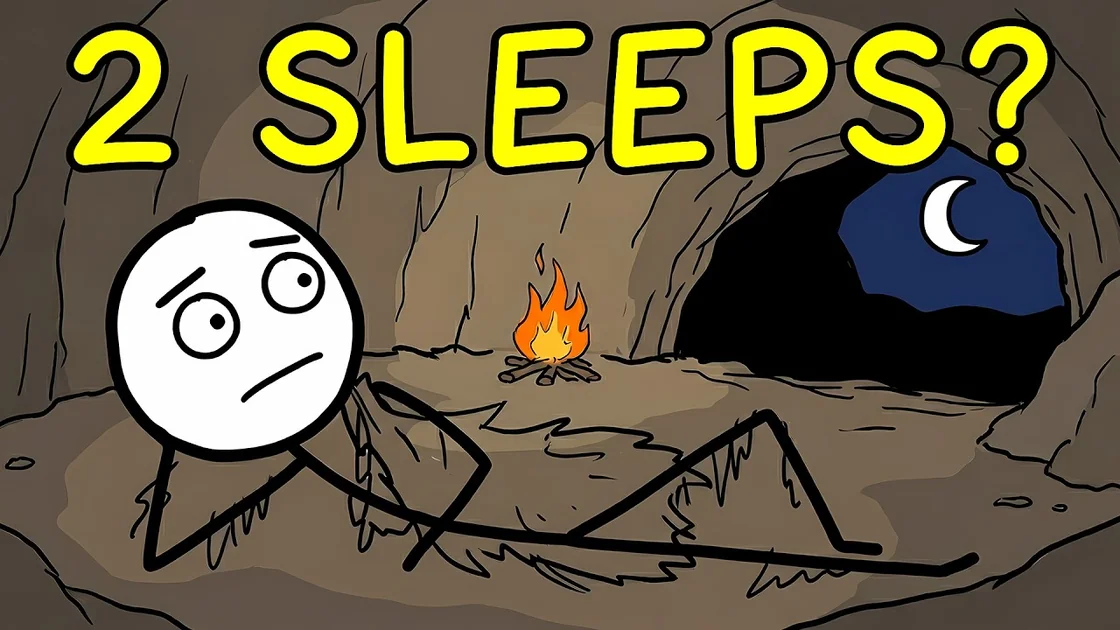 Simple doodle art, dark palette, one bold word at a time. (Source: youtube.com/@Zenn0009, shown for analysis.)
Flat doodle characters, dark moody backgrounds, one bold yellow word at a time, hard-burned subtitles. It looks simple because simple is the strategy: near-zero cost per frame, consistent episode to episode so the channel is instantly recognizable, and no human bottleneck — nobody has to show up, perform, or sit in front of a camera.
Every video is roughly eight and a half minutes: long enough for mid-roll ads, short enough that a meaningful share of viewers finish. Completion rate is one of the heaviest signals the algorithm rewards. Keep it as short as you can while delivering on the title's promise.
Faceless niches that work
Zenn sits in curiosity/explainer, but the formula transfers. These niches share the trait that makes automation viable: the value is in the idea and the writing, not a face.
- Curiosity & "big questions" (Zenn's lane) — history, science, the body, existential puzzles. High ceiling, high competition, lives or dies on the script.
- Psychology & human behavior — named effects, cognitive biases, "why you do X." Zenn's second template lives here.
- Reddit & scary stories — simple visuals, narrated stories. Fast to produce, very platform-native.
- History & daily life of the past — mysteries, empires, money. Deep well, evergreen.
- Calm / ASMR / sleep — consistency beats novelty; the same format runs for months.
- Motivation & "facts" microcontent — lowest per-video payoff, but cheapest to test in volume.
Pick the niche you can keep writing for every week, not the one with the highest theoretical RPM. If you are still deciding, our 12 best faceless YouTube niches, ranked by how well they automate, scores each one on exactly that trait.
The end-to-end autopilot workflow
Most people get stuck here: going from "I've picked a niche" to "an episode just published itself." The old approach is stitching five tools together — write, voice, illustrate, caption, schedule — and babysitting every step. That patchwork is why most people quit before video three.
The shortcut is running the whole loop in one place. Fableclip does exactly this: give it a topic and a format, and it writes the hook-first script, voices it, illustrates in a consistent style, adds word-synced captions, and publishes to TikTok, YouTube, and Instagram on a schedule you set once:
- Start with a topic and a format, not a video. "Curiosity / What did ancient people actually do?" is a format. Feed the topic; let the repeating structure carry the weight.
- Let the script lead with the hook. Read the opening three beats out loud after generating. If they don't grab, regenerate.
- Lock one art style. Consistency is the brand. Choose once, reuse every episode.
- Caption everything. Most faceless content is watched on mute. Burned-in, word-synced captions are how the video communicates at all.
- Schedule once, then leave it. Set a cadence and let episodes ship. Consistency is the signal the algorithm rewards, and the thing humans are worst at sustaining manually.
Start a faceless series with Zenn's script formula →
Demonetization risk and the money truth
Two hard truths most tutorials skip.
On policy: in 2025, YouTube sharpened its monetization rules to make clear that mass-produced and repetitious content is not eligible for the Partner Program. This is the single biggest risk in faceless automation, and it is widely misread as "AI content is banned." It is not. What gets demonetized is low-effort, templated, value-free content — ten near-identical videos a day with a robotic voice over stock footage. What survives is content that adds something real. Zenn cites actual research, writes genuine scripts, and has a distinct point of view. The automation is in the production, not in the thinking. Automate the busywork; never automate the value.
On money: be realistic. Earnings scale with RPM (revenue per thousand views), which swings wildly by niche — finance and tech run several dollars per thousand, while broad entertainment sits near the bottom. Most faceless channels never reach the 1,000 subscribers and 4,000 watch hours needed to monetize at all, and the ones that do mostly earn modest side income, not a salary. The winners are outliers. Automation does not change your odds of winning the lottery — it changes the cost per ticket. The only version that pays is the one that takes the idea seriously.
Topic ideas you can use
The same formula — open-loop title, three-beat hook, real research, snap-back close — applied to Zenn's proven lanes:
"What Did Ancient Humans..." extensions: How did people tell time before clocks? How did they navigate without maps? What did a normal day look like during the worst year of the Black Death? Each one is "something you do every day, solved a completely different way by your ancestors." Built-in curiosity gap.
Named experiment series: the Milgram shock experiment (65% of ordinary people pushed the voltage to lethal), the Stanford Prison experiment, learned helplessness. Each has a name, a story, and controversy — the same template that got the Calhoun video to 3.7M.
"Your body is lying to you": the high-place phenomenon (the urge to jump from heights), the fact that nobody has ever truly "seen" a color (it is fabricated by your brain), why you feel like someone is watching you. Each can hook in one sentence and has solid neuroscience or psychology behind it.
The formula is copyable, the tools are cheap, and the bottleneck was never production. It is consistency, and the willingness to be genuinely interesting.
Frequently asked questions
What is YouTube automation, in plain terms?
Running a YouTube channel without filming yourself. Each video is assembled from a script, an AI voiceover, visuals, and captions. You treat the channel like a small media product — the work is systematized, and you never appear on camera.
Will YouTube demonetize my faceless channel?
It can, but not because it's faceless. YouTube's 2025 policy targets mass-produced, low-value content. Channels that add real substance — original scripts, actual research, a distinct point of view — stay safe. The automation is in the production, not in the thinking.
What makes a good faceless video script?
From Zenn's scripts: a three-beat opening hook (pull the viewer in, flip something they take for granted, seal an open loop), borrowed authority (cite real research, not reworded Wikipedia), and a snap-back close that lands the topic on the viewer personally. Write the opening and the title before anything else.
How long does it take a faceless channel to grow?
It varies wildly and most never take off. Zenn reached 150K+ subscribers in about two months, but that is an outlier carried by one or two viral videos. Plan for a portfolio of cheap attempts over months, not a hit every time.
How much does it cost to start?
Much less than it used to. An all-in-one tool that writes, voices, illustrates, captions, and schedules replaces a stack of separate subscriptions. The main cost is your time choosing topics and reviewing output, not producing it.
Can AI really write and voice the videos?
Yes — script, voiceover, on-style images, and word-synced captions can all be generated, and the finished video auto-published on a schedule. Keep the judgment human: the topic, the hook, and whether each episode is actually worth watching.
Turn one topic into a faceless series
Fableclip writes the script, voices it, illustrates it, captions it, and auto-publishes every episode to TikTok, YouTube and Instagram. Free video slots cover your first video.
Start a free series →